Blog
-
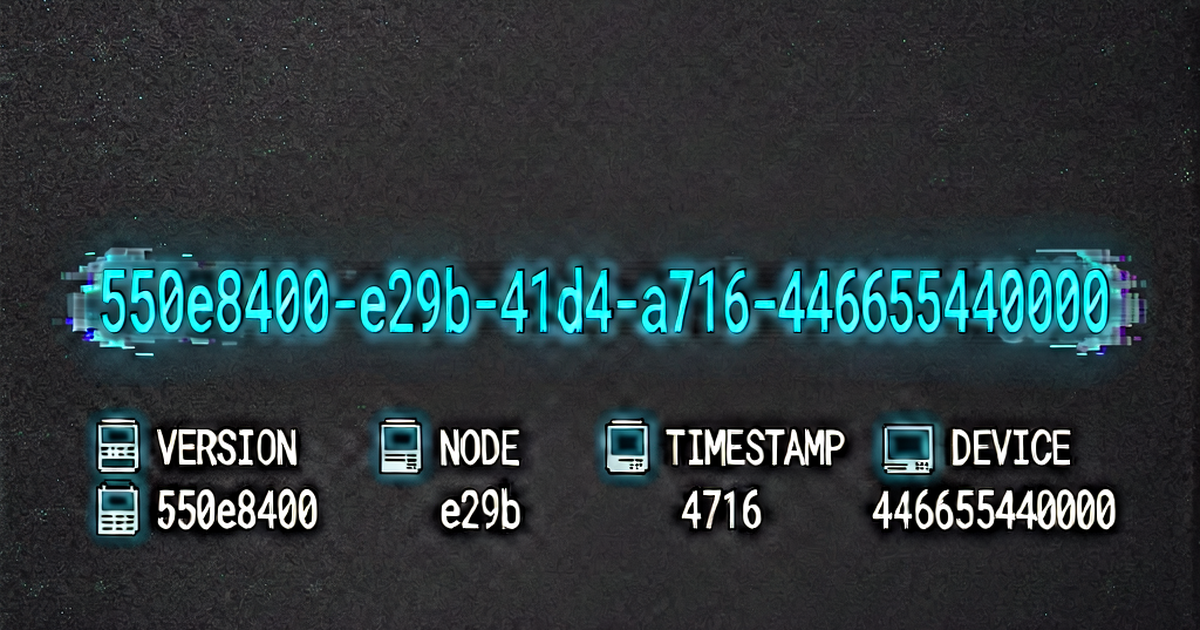
What Is a UUID? Format, Versions, and How They Work
Learn what a UUID is: the 128-bit format, hyphen structure, version numbers, and why UUIDs are practically collision-free. Covers UUID v1, v4, v5, and v7.
-
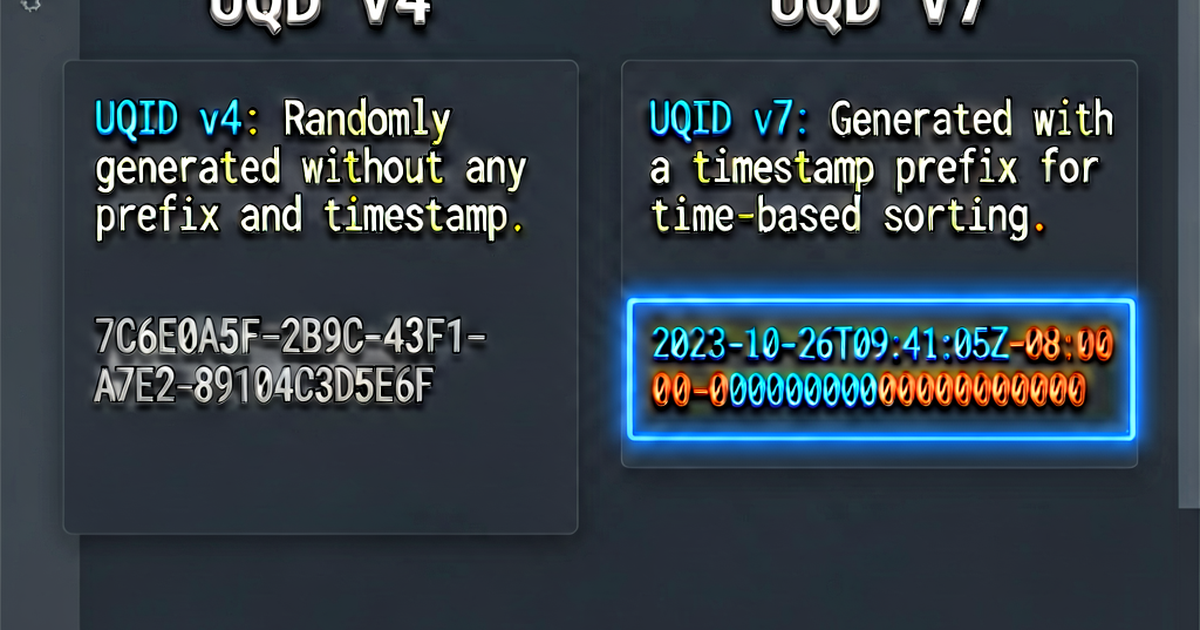
UUID v4 vs v7: Which Should You Use?
Compare UUID v4 (random) vs UUID v7 (time-ordered). Learn when each is appropriate, how v7 improves database index performance, and migration strategies.
-

UUID in Databases: Primary Keys, Storage, and Performance
Learn how to use UUIDs as database primary keys in PostgreSQL, MySQL, and SQLite. Covers storage types, index performance, UUID v7 benefits, and UUID vs autoincrement.
-
UUID vs GUID: Are They the Same Thing?
Understand the difference between UUID and GUID: RFC 4122, Microsoft's GUID format, generation methods, case sensitivity, and when to use each term.
-
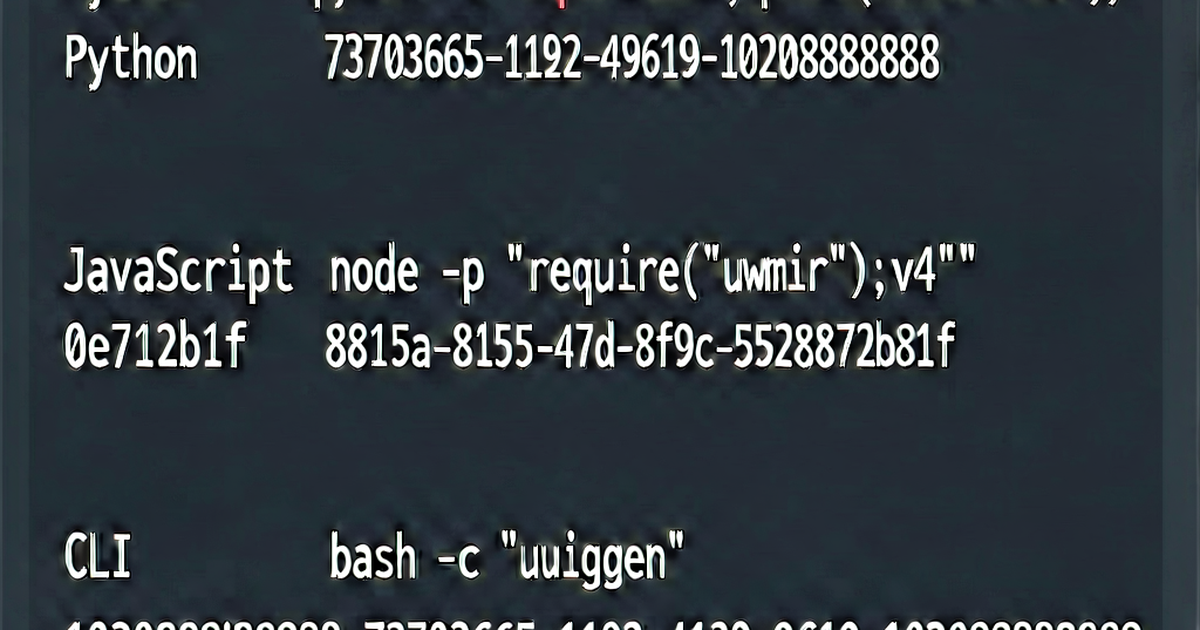
How to Generate a UUID: Online, CLI, Python, JavaScript, and SQL
Generate UUIDs online and in code. Covers Python uuid module, JavaScript crypto.randomUUID, Node.js uuid package, CLI uuidgen, SQL gen_random_uuid, and UUID v7.
-
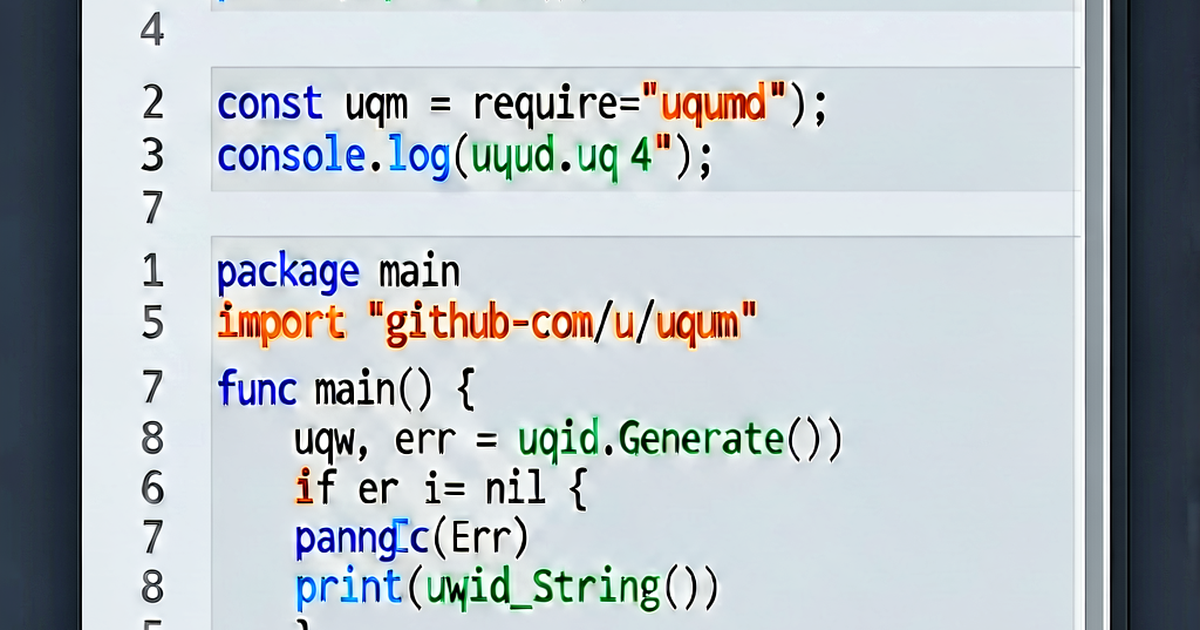
How to Generate UUIDs in Python, JavaScript, Go, and SQL
Generate UUID v4 and v7 in Python (uuid module), JavaScript (crypto.randomUUID), Go (google/uuid), Java, C#, PHP, Rust, and SQL with working code examples.